
Even in affluent Middlesex County, a large number of families are experiencing hunger, and the Sudbury Community Food Pantry has exponentially increased its ability to help with a new, dedicated location.
When the food pantry moved from its long-term quarters in the basement of Ascension Parish Catholic church last summer to a building it was able to purchase because of a major donation, “it was a huge improvement in our ability to manage inventory and daily operations,” said John Thomas, executive director.
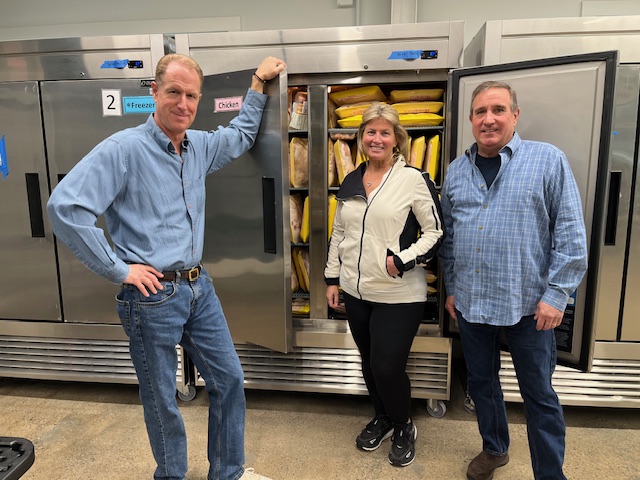
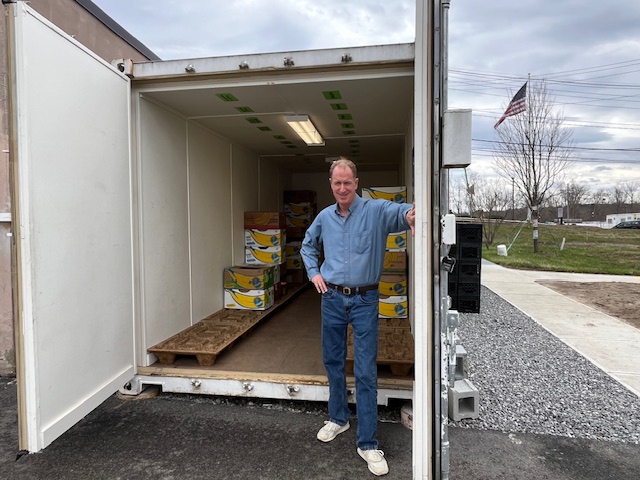
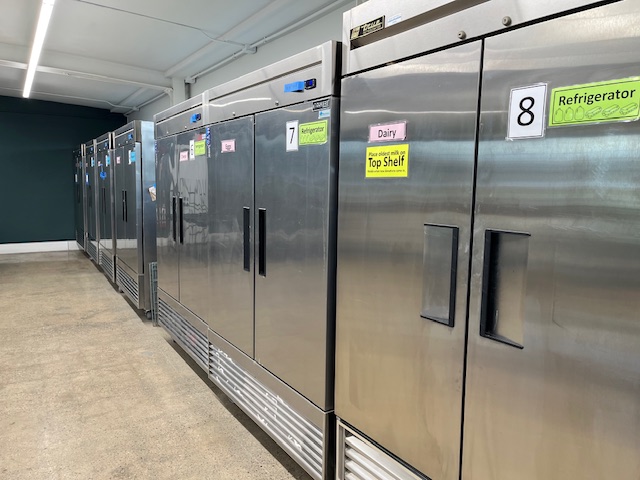
“We are able to manage a much larger percentage of perishable products. The freezers and refrigerators we have now have increased our capacity by 170%. If you add the space in a walk-in cool room, our perishable capacity is up 430%.” A temperature-controlled storage container outside keeps more food fresh summer and winter.
That increase comes not a moment too soon.
A just-released report from the Greater Boston Food Bank and Mass General Brigham states: “the number of Massachusetts households experiencing food insecurity has increased substantially, rising from 19% in 2019 to 40% in 2025.” The report notes that the percentage of households in Middlesex County experiencing food insecurity was 35% in 2025.
Thomas said those numbers are reflected in an increased number of client visits starting in October 2025, which he attributed in part to people affected by federal government layoffs and government shutdowns as well as reductions in Supplemental Nutrition Assistance Program (SNAP) benefits.
The building the pantry moved into last summer provides 3,250 sq. ft. of space, versus 400 to 500 sq. ft. in the basement of Ascension church. No longer do pantry volunteers have to pack up and store food after every distribution. “We had our inventory scattered all over town—in Town Hall, Sewataro and private homes,” Thomas recalled.
“It was time for the church to be a church,” he said, and the pantry was able to buy its new building outright with the help of “a generous gift from a local family.” The new space is located on Route 20 in Wayland, ironically right across the street from the Lamborghini and Bentley luxury car dealerships.
Where does the food come from?
The Sudbury food pantry gets two deliveries a month of about 8,500 pounds each from the Greater Boston Food Bank (GBFB), which is able to buy food from suppliers at below-wholesale cost. Those deliveries provide a large portion of the pantry’s canned goods, eggs, cheese and fresh and frozen meat, noted Michelle Meal, a pantry board member and volunteer in charge of purchasing and procurement.
Meal monitors the Greater Boston Food Bank site’s ordering window to be able to take advantage of deals as they come up.
Thomas noted that, while local food drives and food donations are important and appreciated, cash donations to the food pantry can go a long way. “If you go to the store, buy a box of mac and cheese, and give it to us, we are glad to have it. But if you give us the money you spent, we can buy three or four boxes at the GBFB.”
The monthly food drives at Sudbury elementary schools provide about 35% of the pantry’s inventory, he said, and he hopes to start such school programs in other towns.
Spoonfuls, a food rescue organization, accounts for about 1,000 pounds of food twice every week, said Chris Goff, another board member who coordinates distribution. Spoonfuls collects soon-to-expire perishables such as prepared foods and bakery items from local supermarkets and brings them to food pantries on distribution days. Volunteers often can pack a bag with these donations for each client picking up an order.
“We give out pies and cakes based on family size, and might set aside a cake if we know a family has a birthday coming up,” said Meal.
“We also partner with three farms in the area for whatever produce they pick that day during growing season,” she said. Aurelia’s Garden in Wayland and Gaining Ground in Concord grow produce to donate to food pantries, while Land’s Sake Farm in Weston also supplies fresh produce.
Food retailers also donate directly. “We got a call from Costco in Waltham one day to come pick up 700 pounds of lettuce and 300 pounds of strawberries,” Goff said. “We never say no.”
Who are the food pantry’s clients?
In 2025, the Sudbury food pantry served 1,089 unique families with a total of 3,745 family members, including 442 new families that year.
Last year, the pantry served individuals from 74 different towns, including 253 from Sudbury. While this total ranks third behind Framingham (877) and Marlborough (794), Sudbury has the highest number of families served relative to its population (121 families) and the second-highest per capita service rate, at 13.11 individuals served per 1,000 residents.
Clients can just come to the pantry; no referrals or references are needed. Area social workers, clergy, and other resources can and do suggest people use the food pantry. There are no requirements to live in a specific town.
“We feel if people come to a food pantry, they need to be there,” explained Goff.
In recent months, the food pantry has been concerned that Immigration and Customs Enforcement (ICE) officials might show up. “We are a target-rich environment,” Thomas noted. The only ICE incident to date was when workers employed by a contractor doing a roof repair were stopped, but their papers were in order.
“I had to familiarize myself with immigration policy enforcement, and we had a local immigration attorney develop a policy for our volunteers to follow,” Thomas said. “We are a private landlord, not a public space, so ICE would need a judicial warrant.”
How does food distribution work?
The Sudbury food pantry currently distributes bags of groceries on Tuesday and Friday from noon to 2 p.m. Last year, the pantry handed out 36,024 bags of groceries. Thomas noted they would like to add a third pickup on a weekday evening to accommodate clients who work. Clients can shop at the pantry two times a month. A client is defined as a family which may include multiple individuals.
Clients sign up for a pickup slot online to control the flow of traffic since an average of 64 clients come every distribution day. There’s a checklist of available products online or a paper version when they arrive so they can check off what their family needs and the size of their family. Clients wait outside while volunteers fill the orders.
“Our volunteers get to know our clients, and the quality of the interaction is very high,” said Rick Billig, the volunteer director of operations.
A tent-covered area of the parking lot has tables with products such as prepared foods and baked goods nearing their expiration dates, plus any other products that the pantry has a surplus of. Clients can select from these goods while their orders are being filled.
“We do have a registration form clients fill out to get a pantry ID number. We have to collect certain information, such as whether clients are veterans and how many towns we are serving, to file with the state,” Meal said. The pantry does not collect information on immigration status.
What do volunteers do?
All of the people who work at the Sudbury food pantry are volunteers, including the executive director.
Most of the regular volunteers are trained to handle specific tasks. Some come on the days the GBFB delivery arrives, to unpack and store those tons of food. Others restock shelves, fill the client orders on distribution days, or handle necessary office tasks. High school students volunteer to fulfill their community service requirement. A local Eagle Scout has undertaken a landscaping project.
Pantry volunteers deliver food to the homes of 40 clients in Sudbury who have been identified by the town social worker as needing that service.
Thomas noted the pantry is working on one-time and short-term projects that groups such as businesses or the Girl Scouts who want to help can handle.